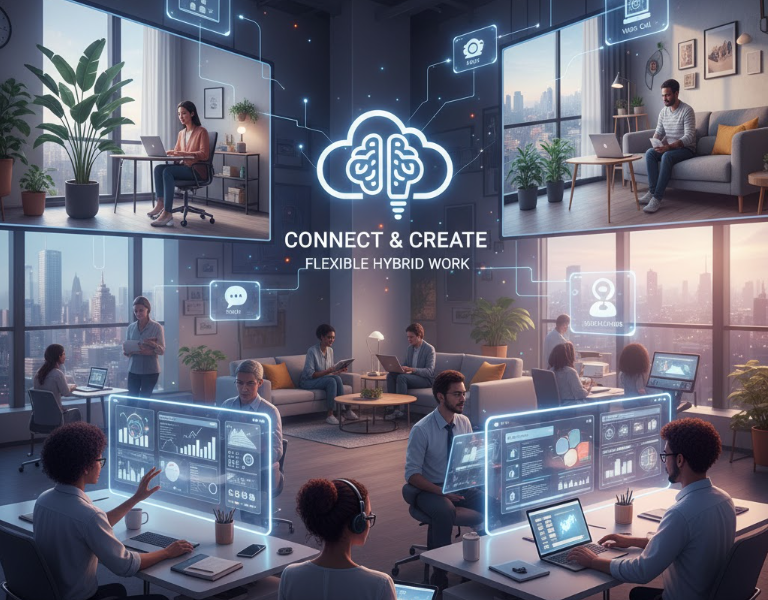
The world of work has fundamentally shifted. The once-clear divide between the office and the home is gone, replaced by the hybrid working model. To thrive in this new landscape, businesses need more than just a schedule; they need a strategic approach that fosters innovation and flexibility. The linchpin of this success? A robust collaboration platform which fostering innovation and hybrid work.
This article explores how you can leverage a powerful collaboration tool to build an innovative and highly flexible hybrid work environment.
The Innovation Challenge in Hybrid Work
Hybrid work offers immense benefits—better work-life balance, reduced overhead, and a wider talent pool. However, it presents a unique challenge to innovation. Spontaneous ‘water cooler’ moments, serendipitous encounters, and quick whiteboard sessions that often spark groundbreaking ideas are harder to replicate when teams are distributed.
The Solution: You need a digital environment that intentionally replicates and enhances these moments, making collaboration accessible, asynchronous, and inclusive.
The Collaboration Platform as the Digital Hub fostering innovation
A modern collaboration platform (like Slack, Microsoft Teams, or Google Workspace) is more than just a chat application; it is the digital equivalent of your office. It centralizes communication and workflow, ensuring that no matter where an employee is located, they have the same access to resources, people, and projects.
- Centralized Knowledge: Use dedicated channels or spaces to store project histories, meeting notes, and institutional knowledge. This allows remote and in-office staff to quickly retrieve context, reducing delays and boosting efficiency.
- Persistent Communication: Unlike emails, platform threads keep conversations contextual and accessible to everyone involved, ensuring a seamless handover between team members across time zones.
- Seamless Onboarding: New employees, regardless of location, can quickly plug into team channels and absorb the company’s culture and current projects, speeding up their time-to-productivity.
Driving Flexibility and Autonomy
Flexibility is a core component of the hybrid model, and the right platform is essential for making it work without sacrificing accountability.
- Asynchronous Workflows: The platform enables teams to move beyond mandatory real-time meetings. Documents and feedback can be shared and iterated upon over time, respecting individual work schedules and energy levels. This empowers employees to work when they are most productive.
- Transparent Project Management: Integrating project management tools (like Asana or Trello) directly into the collaboration platform provides a real-time, transparent view of who is working on what, and the status of every task. This trust-building transparency is key to a flexible work environment.
- Status Indicators: Simple features like custom status messages allow employees to clearly signal their availability (e.g., “Deep Work – Available after 3 PM” or “Working Remotely – Responding to DMs”), minimizing interruptions and respecting focus time.
Fostering Collaboration for Innovation and Hybrid Work
This is where the platform truly shines in driving innovation—by deliberately engineering moments for creativity and cross-functional interaction.
| Platform Feature | How It Fosters Innovation |
| Dedicated “Ideation” Channels | Provides a safe, low-pressure space for employees across departments to toss around speculative ideas, concepts, and wild suggestions. |
| Virtual Whiteboards & Canvas Apps | Integration with tools like Miro or FigJam allows teams to visually brainstorm, map out complex processes, and prototype ideas together in real-time or asynchronously. |
| “Hackathon” or “Innovation Blitz” Spaces | Creates a focused, time-bound digital hub for cross-functional teams to quickly develop and test new concepts, replicating the energy of an in-person event. |
| Cross-Departmental Interest Groups | Channels dedicated to niche topics (e.g., “Future of AI,” “Design Trends”) organically connect employees with similar interests but different day jobs, leading to unexpected, innovative collaborations. |
Keys to Successful Platform Adoption
Implementing a platform isn’t enough; you must cultivate its use to match your innovative goals.
- Lead from the Top: Leadership must actively use the platform to communicate, share ideas, and engage with the team. This sets the behavioral standard.
- Define Digital Etiquette: Establish clear guidelines on when to use chat, email, or video calls. Define acceptable response times to manage expectations for flexible workers.
- Invest in Training: Ensure every employee knows how to use the advanced features—beyond just simple messaging—to maximize productivity and creative output.
By thoughtfully deploying and integrating a powerful collaboration platform, businesses can successfully navigate the complexity of the hybrid working model. This strategic approach not only preserves flexibility but actively fosters a more innovative, connected, and resilient workforce ready for the future.
7 best collaboration platform which fostering innovation
Here is an introduction to 7 popular collaboration platforms that cater to different business needs.
| Platform | Type / Main Function | Key Features & Best For |
| 1. Microsoft Teams | Communication & Enterprise Integration | A hub for teamwork that integrates chat, video meetings, file storage, and seamless connectivity with the entire Microsoft 365 (Office) suite. Best for: Large enterprises and teams already heavily invested in the Microsoft ecosystem. |
| 2. Slack | Team Messaging & Communication | Known for its channel-based organization, direct messaging, voice/video calls, and extensive app integration capabilities (over 2,000 apps). Best for: Startups and remote teams that prioritize rapid, organized, and streamlined communication. |
| 3. Google Workspace (formerly G Suite) | Productivity & Document Collaboration | A collection of cloud-based tools (Docs, Sheets, Slides, Gmail, Meet) that enables real-time collaborative editing and cloud file storage via Google Drive. Best for: Teams who rely heavily on Google’s ecosystem for document creation, sharing, and simple office productivity. |
| 4. Asana | Project & Task Management | Offers robust tools for assigning and tracking tasks, managing project timelines, and visualizing workflows across teams. Best for: Project managers and teams needing a detailed and structured solution for complex task management and workflow automation. |
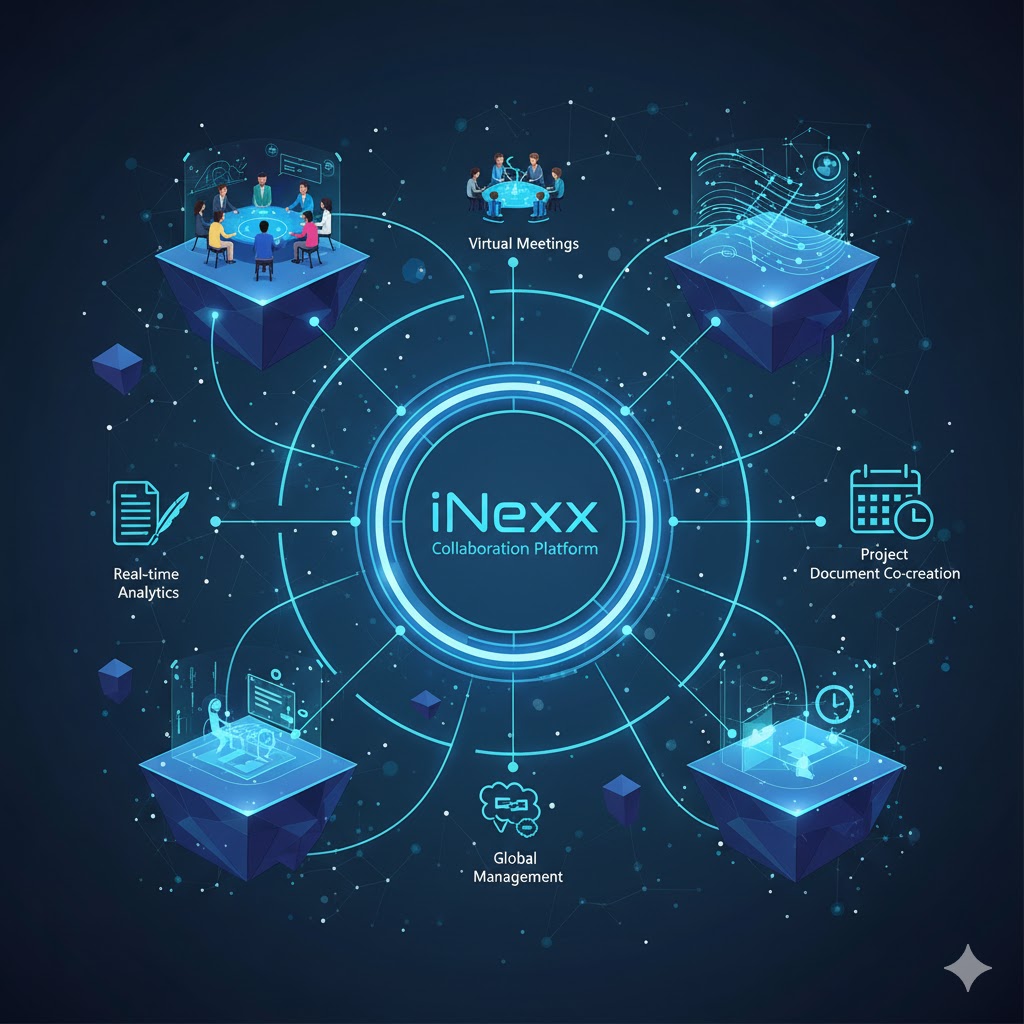
| 5. iNexx (inexx.vn) | All-in-One Digital Workplace / Internal Communication | Focuses on seamless internal connection, digital culture, and user experience. It integrates chat (iNexxus), task/project management (iNexxWork, iNexxPro), document management (iNexxFile), and payroll notification onto a single, synchronized platform. Best for: Organizations in Vietnam seeking a comprehensive, customizable solution for digital transformation and internal staff engagement. |
| 6. Trello | Visual Task Management (Kanban) | Uses simple, visual Kanban boards (lists and cards) with a drag-and-drop interface to organize tasks, track progress, and manage personal or small team workflows. Best for: Individuals and small teams who need a straightforward, visual, and agile way to manage tasks and projects. |
| 7. Notion | All-in-One Workspace & Knowledge Base | A highly flexible platform that combines note-taking, project management, wikis, and databases into a single, customizable workspace. Best for: Creative teams, startups, and users who want a high degree of customization to build their own internal tools and knowledge bases. |
Conclusion
The landscape of collaboration platforms is diverse, with each tool offering unique strengths tailored to specific organizational needs. From the comprehensive, enterprise-focused power of Microsoft Teams to the communication agility of Slack, organizations have a wealth of options. Google Workspace excels for document co-creation, while Asana and Trello provide structure for project and task management. Notion stands out as a flexible, all-in-one knowledge base builder.
Crucially, platforms like iNexx (inexx.vn) demonstrate a modern trend toward integrated, user-centric environments. iNexx goes beyond simple management by focusing on building internal connection and a sustainable digital culture, integrating internal communication, project workflows, and HR utilities into a single, cohesive platform.
Ultimately, the best choice depends on a company’s size, existing tech stack, and primary collaboration objective—whether it’s pure communication, document creation, project tracking, or holistic digital transformation.
Further Readings
Innovate or Stagnate: The Technology vs. Culture Battle in Creative Business
